Keeping muscle
Muscle mass and strength decline with age, and research on women shows a further drop around menopause.
Protein after 45
This page is for women aged 45 to 65. In these years, many women look to protein for three jobs: keeping muscle, steadier blood sugar and comfortable digestion.
You may notice the changes before you can name them. The stairs feel longer, the afternoon slump comes earlier, and a protein shake that once sat fine now leaves you bloated. Below: how much protein to aim for, how to choose one that is easy on your stomach, and two simple places to add it.

Three jobs for protein
Muscle mass and strength decline with age, and research on women shows a further drop around menopause.

Muscle is one of the main places your body takes up sugar after a meal.

A protein that is easy on your stomach is one you will keep using.

Daily amount
Muscle mass and strength decline with age, and research on women shows a further drop around menopause. Muscle is also one of the main places your body takes up sugar after a meal, so keeping muscle matters for more than strength.
Three reference points, all in grams of protein per kilogram of body weight a day:
| Body weight | 1.0 to 1.2 g/kg | 1.2 to 1.6 g/kg |
|---|---|---|
| 130 lb (59 kg) | 59 to 71 g | 71 to 94 g |
| 150 lb (68 kg) | 68 to 82 g | 82 to 109 g |
| 170 lb (77 kg) | 77 to 92 g | 92 to 123 g |
Spread it across the day. Studies in older adults often use about 25 to 30 grams of protein per meal as a practical guide. Pair it with muscle-strengthening activity on at least two days a week, as the US Physical Activity Guidelines recommend.
For a figure based on your own weight and activity, use our protein calculator. For the full detail on amounts, timing and food sources, read our guide to menopause and protein. If you have kidney disease or another condition that affects protein needs, ask your doctor what is right for you.
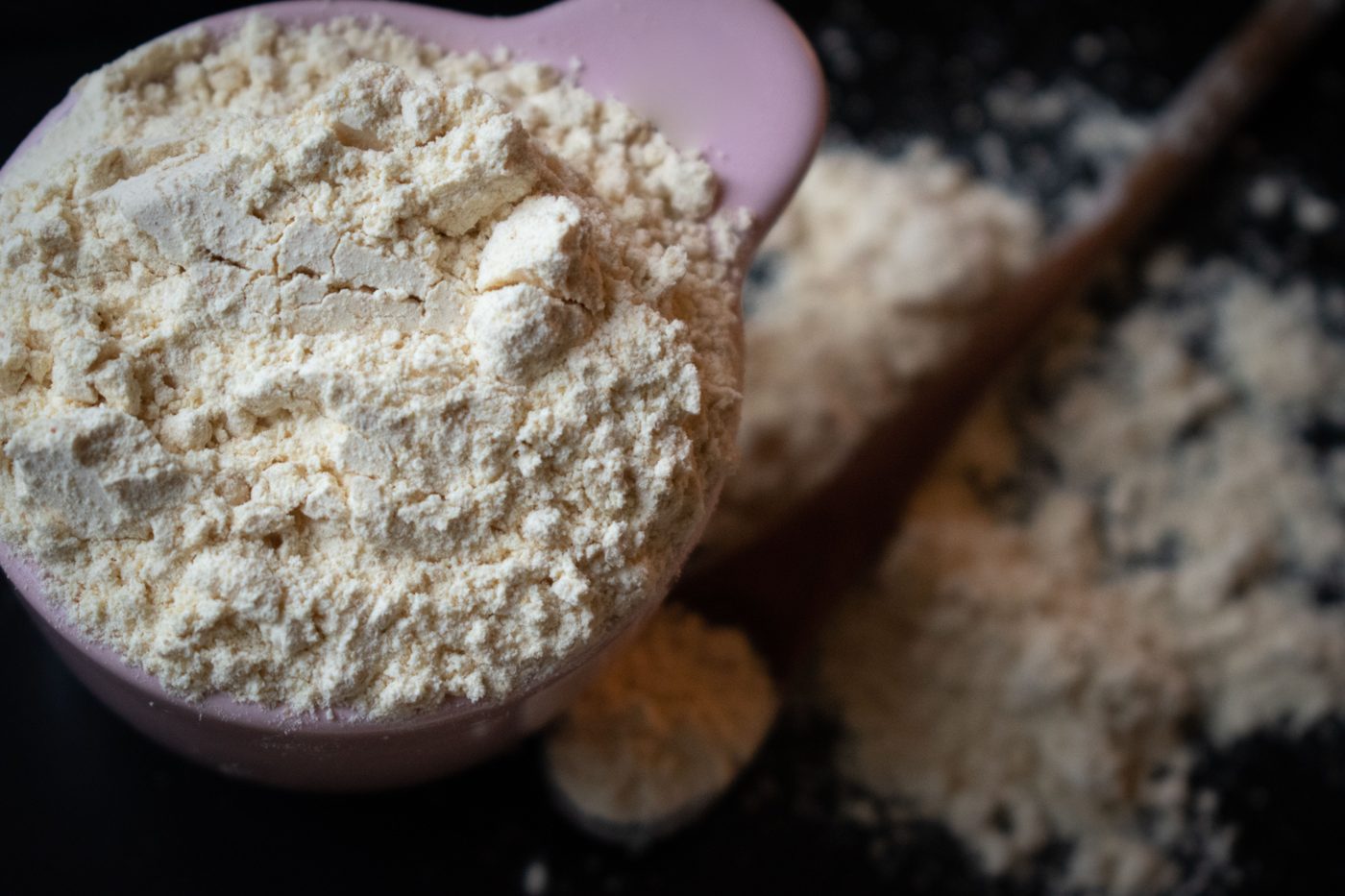
Easy on your stomach
Many women give up on protein shakes after one bad experience with a powder. Powders vary a lot. When one leaves you bloated, the cause is often the lactose, the sweeteners, the gums or a long list of added ingredients.
Before you try again, check three things on the label: lactose per serving, how many ingredients it has, and whether it is tested for heavy metals. Here is how Protelicious whey answers each one.
Our whey comes from pasture-raised cows in the French Alps. It contains milk, so it is not suitable for anyone with a milk allergy.

Protein at breakfast
Breakfast is often the meal with the least protein. Toast, coffee and fruit add up to well under 10 grams. That makes it the easiest meal to change.
One scoop of Protelicious whey adds 20g of protein (True Original) or 17g (True Chocolate and True Strawberry), with 0g added sugar. Three ways to use it:
Each 1lb bag holds 18 servings. Read how our whey is made.

Dessert with protein
Chalky taste is a common complaint about protein products. Dessert is a simple place to add protein you look forward to.
Protelicious Protein Ice Cream comes in three flavors. All three have zero added sugar, are formulated without gluten-containing ingredients, and give you protein that supports healthy blood sugar.
Your questions
The US RDA is 0.8 grams per kilogram of body weight a day. Expert groups suggest 1.0 to 1.2 grams for healthy adults over 65, and the Dietary Guidelines for Americans, 2025–2030 set a goal of 1.2 to 1.6 grams. For a 150 lb (68 kg) woman, that is about 68 to 109 grams a day, spread across your meals.
Add one scoop of whey protein to something you already eat. Stir True Original into Greek yogurt or oatmeal, or whisk True Chocolate into your morning coffee with a splash of milk. One scoop adds 20g of protein (True Original) or 17g (True Chocolate and True Strawberry).
Powders differ in lactose, sweeteners, gums and other added ingredients, so check the label. Protelicious whey has less than 2g lactose per serving and a maximum of three ingredients. True Original has one ingredient: whey protein concentrate.
Up to 28g of protein per pint in True Deep Chocolate, and up to 27g per pint in True Madagascar Vanilla and True Velvety Strawberry. All three have zero added sugar.
Protelicious whey and Protelicious Protein Ice Cream are formulated without gluten-containing ingredients. Both contain milk, so anyone with a milk allergy should avoid them.
Most of your protein should come from food such as eggs, yogurt, fish, chicken, beans and lentils. A protein powder is useful on days when food alone falls short, which is most common at breakfast.
No compromise
French gourmet whey from pasture-raised cows in the French Alps.
Shop whey protein